What Is Vibe Coding Games — And Why It Matters
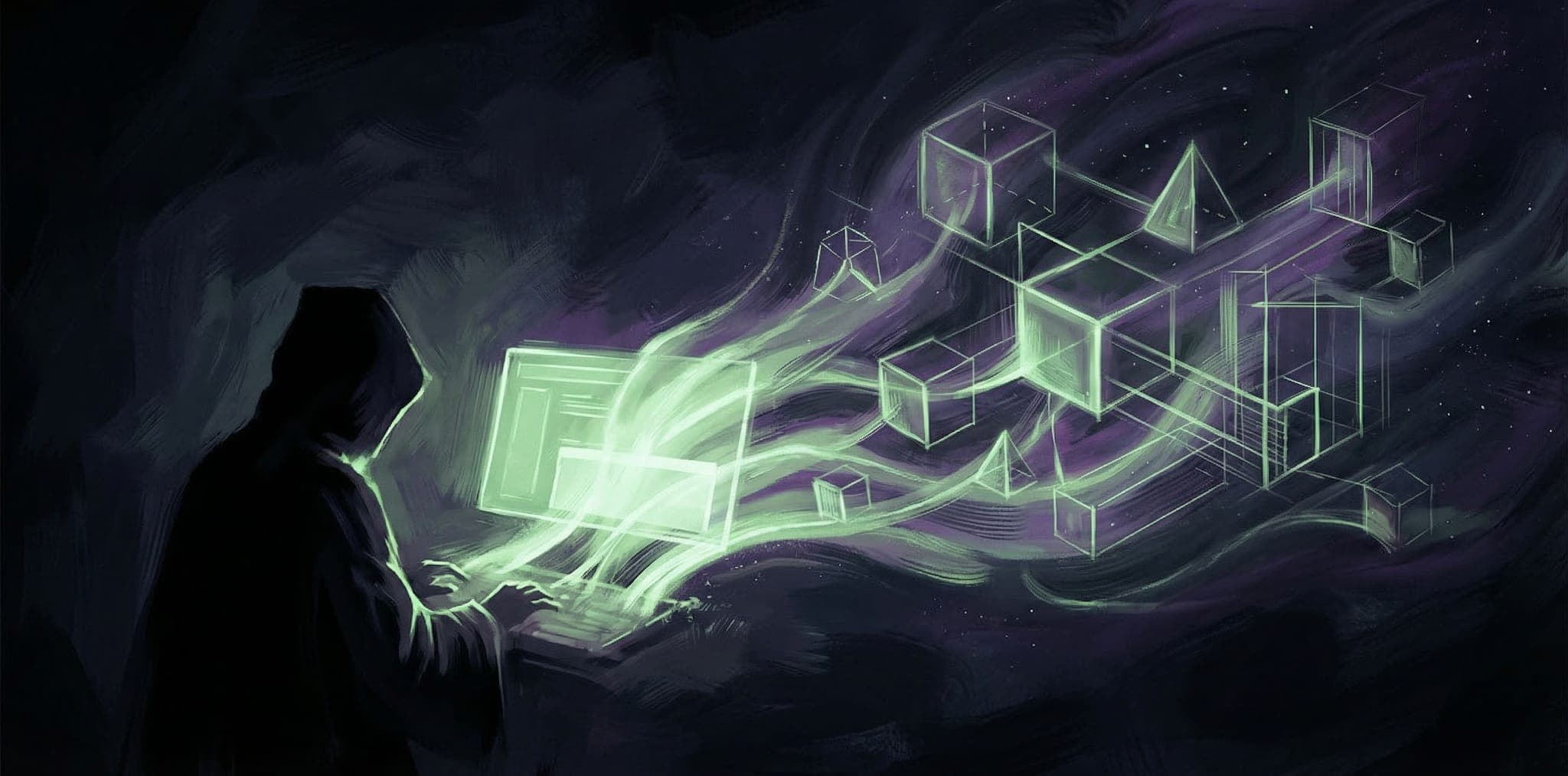
In early 2025, Andrej Karpathy coined a term that stuck: vibe coding.
The idea was simple. Instead of writing code line by line, you describe what you want to an AI and let it build. You are no longer a programmer. You are a director. You have a vibe, and the AI executes it.
Within months, an entire category of apps was built this way. Founders shipped MVPs in a weekend. Designers built tools they could never have coded. Non-technical people became builders.
The same shift is now happening for games.
What vibe coding games means
Vibe coding games is exactly what it sounds like. You describe a game — its mechanics, its visual style, how it feels to play — and an AI builds it. You iterate in conversation. You say "make the enemies faster" or "add a leaderboard" or "give it a neon aesthetic" and the game updates.
You do not write a single line of code. You do not open an engine. You do not buy assets or hire a freelancer.
You just describe. The game appears.
Why this is different from "no-code" tools
No-code game builders have existed for years. GameSalad. Construct. GDevelop. They lower the barrier — but they do not remove it. You still need to understand game logic. You still drag and drop. You still configure physics parameters. You still spend hours watching tutorials.
Vibe coding games removes the interface entirely. There are no nodes to connect, no event sheets to fill in. The only interface is language.
This is not an incremental improvement. It is a categorical one.
The skill you need is no longer programming, or even tool proficiency. It is clarity. Can you describe what you want? Can you articulate how it should feel? Can you iterate on feedback?
If yes — you can ship a game.
Who this unlocks
The people who could not build games before were not untalented. They were blocked by translation. They had the idea. They did not have the fluency to turn it into working code.
That translation layer is gone.
The creator who wants to build a game around their community. The founder who wants an interactive product demo. The memecoin team who wants something playable to rally behind. The kid who has been designing games on paper for years but never had the tools.
All of them can build now.
The Three.js moment
Browser games are having a renaissance. Three.js and WebGPU have made it possible to run rich 3D experiences natively in a browser tab — no download, no install, no app store.
The missing piece has always been distribution and creation. Building a Three.js game required serious JavaScript expertise. Finding players required a platform.
Vibe coding solves the creation side. BeyondPlay solves both — build by describing, then publish to Telegram, Farcaster, and the web in one click.
What this looks like in practice
Someone describes a game to BeyondPlay's AI agent: "A side-scrolling platformer with a frog character, pixel art style, obstacles are lily pads, the goal is to reach the other side without falling."
Within hours, the game exists. It is playable. It has leaderboards. It runs in the browser. It can be shared with a link.
No engine. No developer. No budget. Just a description and an afternoon.
The bottleneck was never creativity
Every game that does not exist yet is not missing because nobody had the idea. It is missing because someone had the idea and could not build it.
Vibe coding games collapses that gap.
The era of games being locked behind technical expertise is ending. What replaces it is something more interesting — games as a creative medium, available to everyone who has something to express.